Identification and characterization of innate immunity in Actinidia melanandra in response to Pseudomonas syringae pv. actinidiae
Oct 13, 2024· ,,,,,,,,,,,,,,,,,·
0 min read
,,,,,,,,,,,,,,,,,·
0 min read
Lauren Hemara
Abhishek Chatterjee
Shin-Mei Yeh
Ronan Chen
Elena Hilario
Liam Le Lievre
Ross Crowhurst
Deborah Bohne
Saadiah Arshed
Haileigh Patterson
Kelvina Barrett-Manako
Susan Thomson
Andrew Allan
Cyril Brendolise
David Chagné
Matthew Templeton
Jibran Tahir
Jay Jayaraman
Abstract
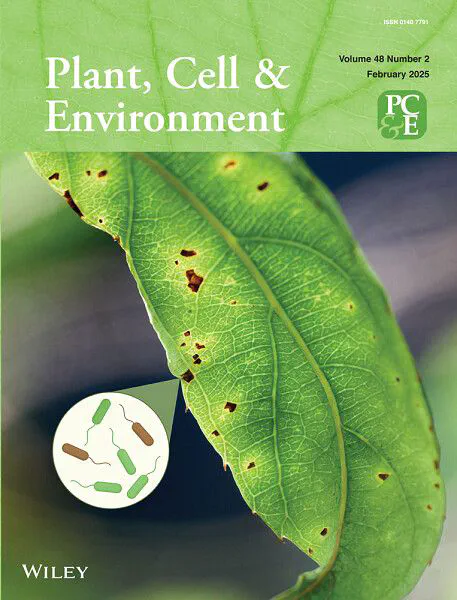
Pseudomonas syringae pv. actinidiae biovar 3 (Psa3) has decimated kiwifruit orchards growing susceptible kiwifruit Actinidia chinensis varieties. Effector loss has occurred recently in Psa3 isolates from resistant kiwifruit germplasm, resulting in strains capable of partially overcoming resistance present in kiwiberry vines (A. arguta, A. polygama, and A. melanandra). Diploid male A. melanandra recognises several effectors, sharing recognition of at least one avirulence effector (HopAW1a) with previously studied tetraploid kiwiberry vines. Sequencing and assembly of the A. melanandra genome enabled the characterisation of the transcriptomic response of this non-host to wild-type and genetic mutants of Psa3. A. melanandra appears to mount a classic effector-triggered immunity (ETI) response to wildtype Psa3 V-13, as expected. Surprisingly, the type III secretion (T3SS) system-lacking Psa3 V-13 ∆hrcC strain did not appear to trigger pattern40 triggered immunity (PTI) despite lacking the ability to deliver immunity-suppressing effectors. Contrasting the A. melanandra responses to an effectorless Psa3 V-13 ∆33E strain and to Psa3 V-13 ∆hrcC suggested that PTI triggered by Psa3 V-13 was based on the recognition of the T3SS itself. The characterisation of both ETI and PTI branches of innate immunity responses within A. melanandra further enables breeding for durable resistance in future kiwifruit cultivars.
Type
Publication
Plant, Cell & Environment
Effector Recognition
Pseudomonas Syringae Pv. Actinidiae
Genome Biosurveillance
Type III Effectors
Kiwifruit

Authors
Postdoctoral Fellow
Lauren Hemara is a Postdoctoral Fellow at the University of Toronto Scarborough.